

Silk Road: The Hexi Corridor
Scheduled Small Group
9 days / 8 nights
Lanzhou · Zhangye · Jiayuguan · Dunhuang
Lanzhou · Zhangye · Jiayuguan · Dunhuang
Breakfast on 8 of 9 days · lunch on 4
High-speed rail Lanzhou–Zhangye (about 3h); private coach for the corridor legs Zhangye–Jiayuguan–Dunhuang (2.5-5h each); departure from Dunhuang by through-rail, or by an air sector booked separately by the travel partner.
May to June and September to October
Moderate — long drives, light walking days
Professional photography can be arranged on selected journeys, subject to destination and availability. Where it is available, a local photographer joins agreed days and delivers an edited set after travel — at additional cost, quoted with your itinerary.
Overview
The corridor end to end: river city, rainbow hills, fort, grottoes.
Route map
What stands out
- ✓ Mogao Caves on reserved tickets
- ✓ Crescent Lake under the Mingsha dunes at dusk
- ✓ Zhangye Danxia in low light
- ✓ Jiayuguan fort, the wall's western end
- ✓ The Giant Buddha Temple's reclining Buddha
- ✓ Zhongshan Bridge and the Yellow River, Lanzhou
- ✓ Shazhou night market, Dunhuang
Planning note
The Hexi Corridor runs on Mogao tickets and the season. Cave visits use reserved timed slots with daily caps that sell out weeks ahead in season, and the desert days are planned around the temperature rather than against it.
Day by day
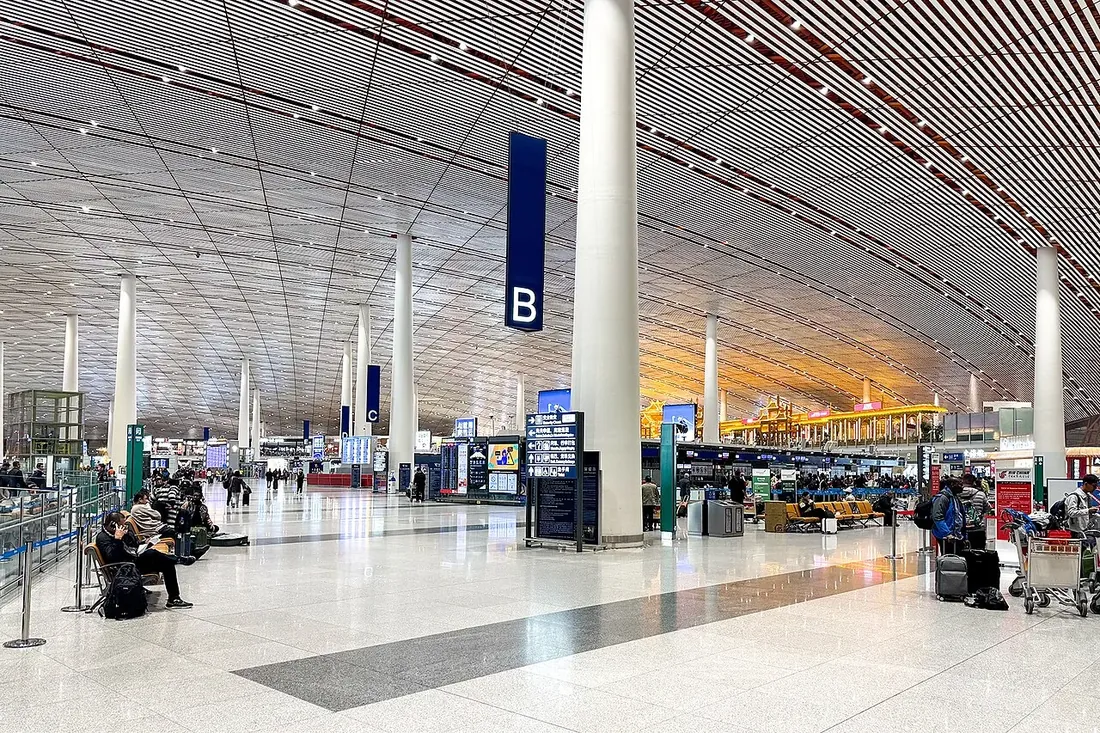
Met at the station or airport and settled near the river. The evening is the Yellow River's: Zhongshan Bridge lit over the water - the first permanent bridge across the river, raised in 1909 with German engineering when this was still a ferry ford on the imperial post road - the old wooden waterwheel park, whose wheels are the Ming-dynasty irrigation technology that made the riverbanks an orchard belt, and the riverside promenade where the city actually spends its nights - tea from flasks, card games, the ferris wheel turning. The guide briefs tomorrow's beef-noodle protocol after dinner, and it matters.
Meals — · Hotel Lanzhou, city centre
Arrival day: keep it light — an early night is the best thing for the week ahead.
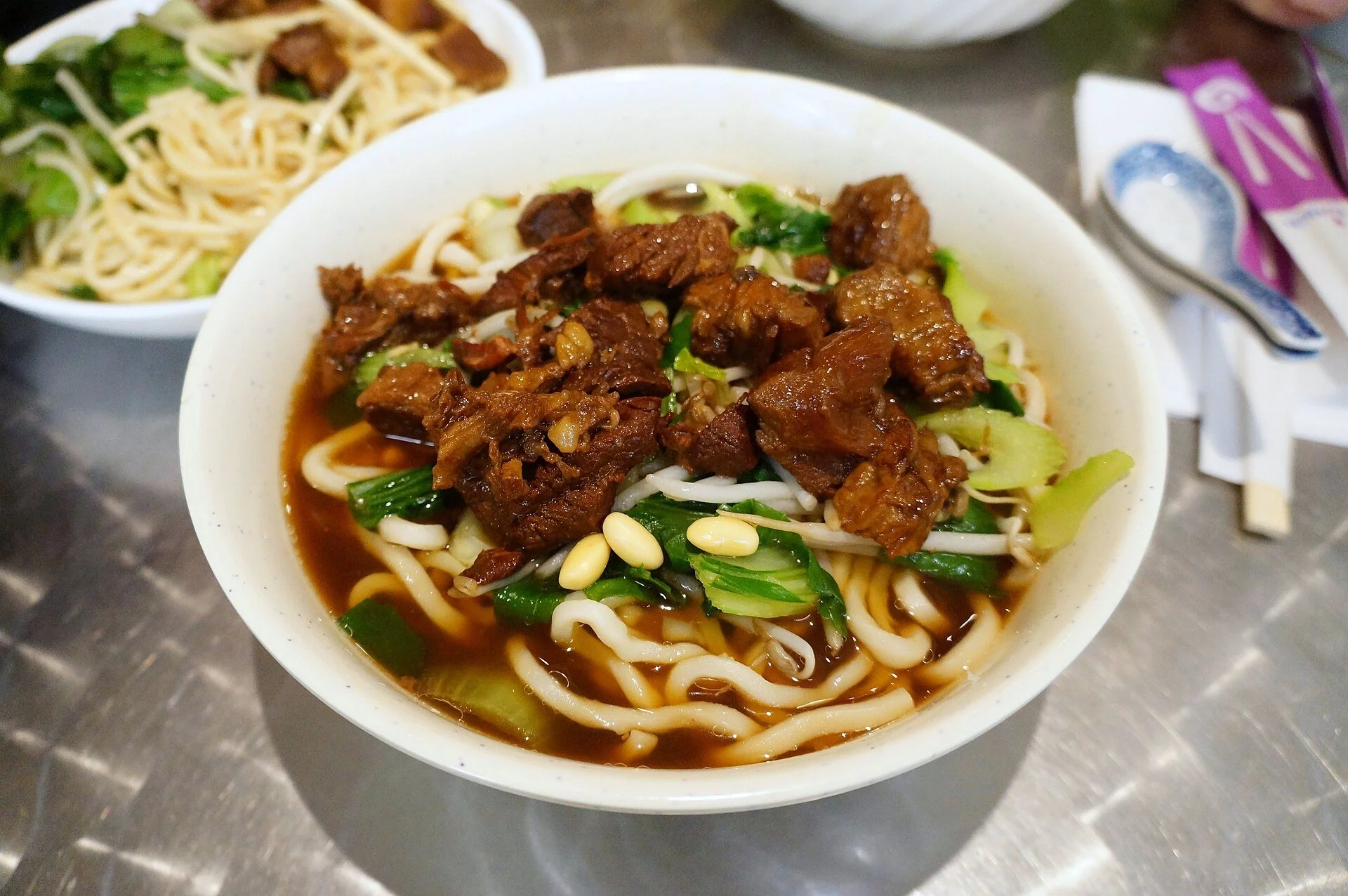
Breakfast at a beef-noodle shop the local way: ordered before nine, by width from capillary to belt, with the chilli oil ladled at the counter. The Gansu Provincial Museum holds the Bronze Galloping Horse - the Eastern Han bronzework unearthed at Wuwei in 1969 that became the emblem of Chinese tourism - and the silk-road rooms that give the week its maps, then the afternoon high-speed rail to Zhangye across the corridor's first emptiness, running on rails that trace the same oasis-hop every caravan between Chang'an and the Western Regions was funnelled through for a thousand years. The skewer streets run late.
Meals B · Hotel Zhangye, city centre
A day that works at any pace — the guide reads the group and adjusts on the ground.
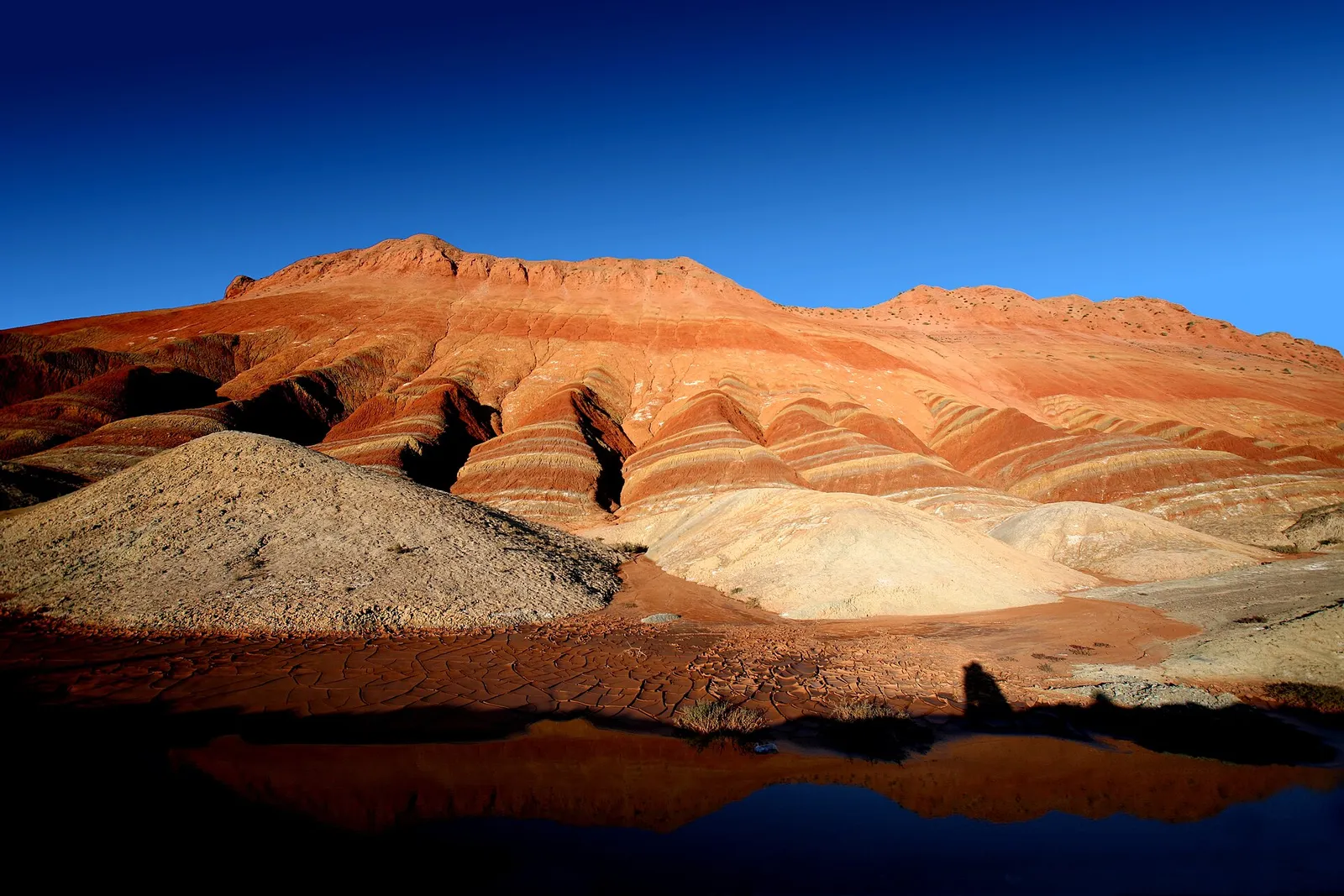
Into the Danxia Geopark at opening, while the low light does the work the hillsides cannot do at noon: ridge after ridge of banded reds and golds, boardwalks between the viewpoints. Midday back in town, afternoon at the Great Buddha Temple - Zhangye's 34-metre reclining Buddha, the largest indoor one in China, raised in 1098 under the Western Xia dynasty, with the treasure's scriptures written in gold and silver ink and the walls holding Ming-era story murals; the temple is the reason Zhangye matters to pilgrim history, and the guide walks it before the light dies. Evening free.
Meals B, L · Hotel Zhangye
Late-afternoon light suits the rock: the boardwalk keeps it an easy hour's walk.
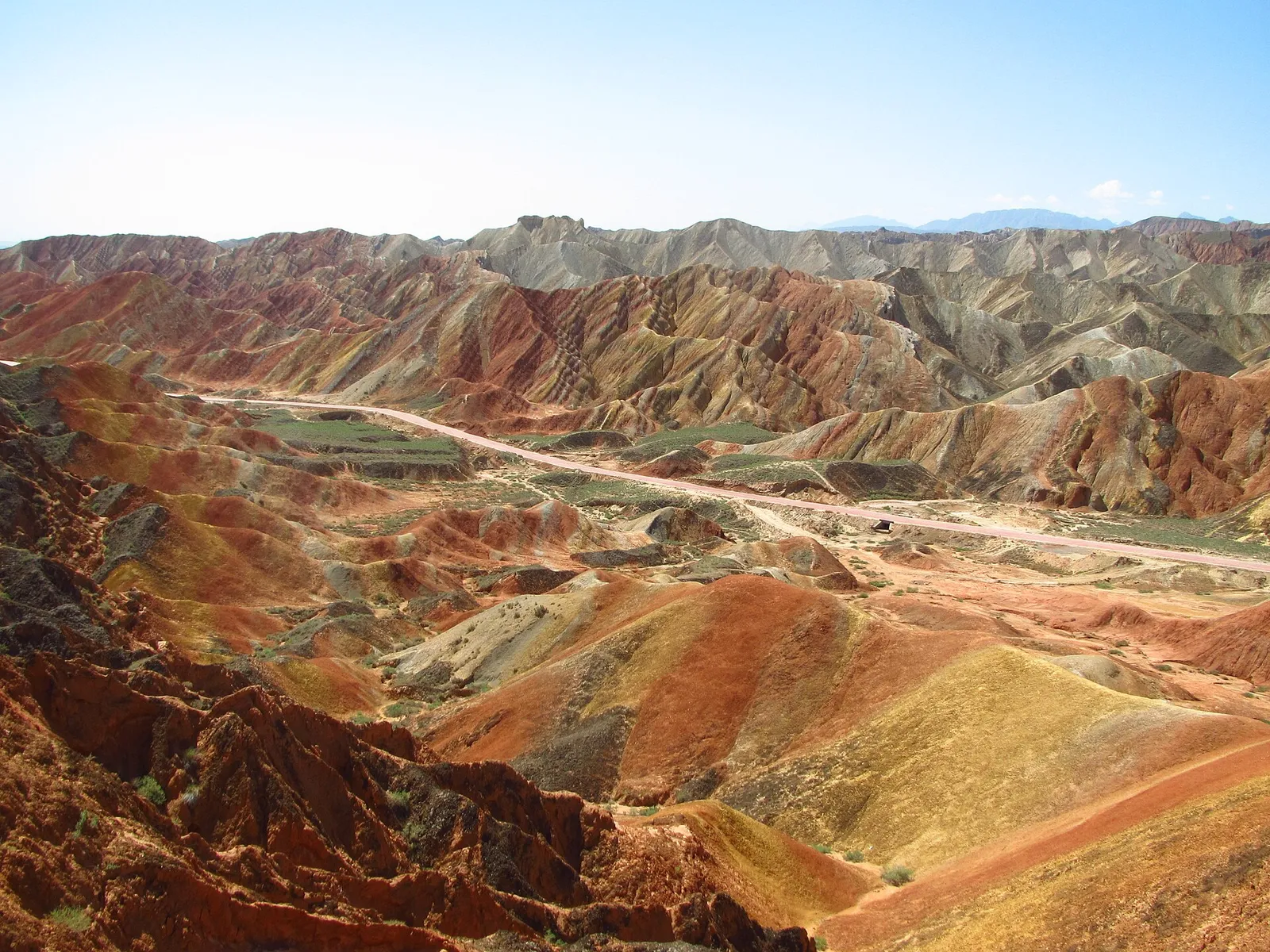
The morning at the Mati Temple grottoes, halls carved into the cliff above a valley that still moves with horses - a working monastery rather than a museum, its caves begun in the fifth-century Northern Liang era when monk-translators were carrying Buddhism east along this very corridor; the horse-hoof print in the rock that gives the temple its name is the local telling of why the site is holy. Then the drive west to Jiayuguan with the Qilian snowline riding the horizon the whole way, arriving for the fort's late-afternoon light and a roast-lamb dinner in China's sturdiest garrison town.
Meals B, L · Hotel Jiayuguan, near the fort
Modest dress and quiet voices; some halls ask for shoes off and no photography.
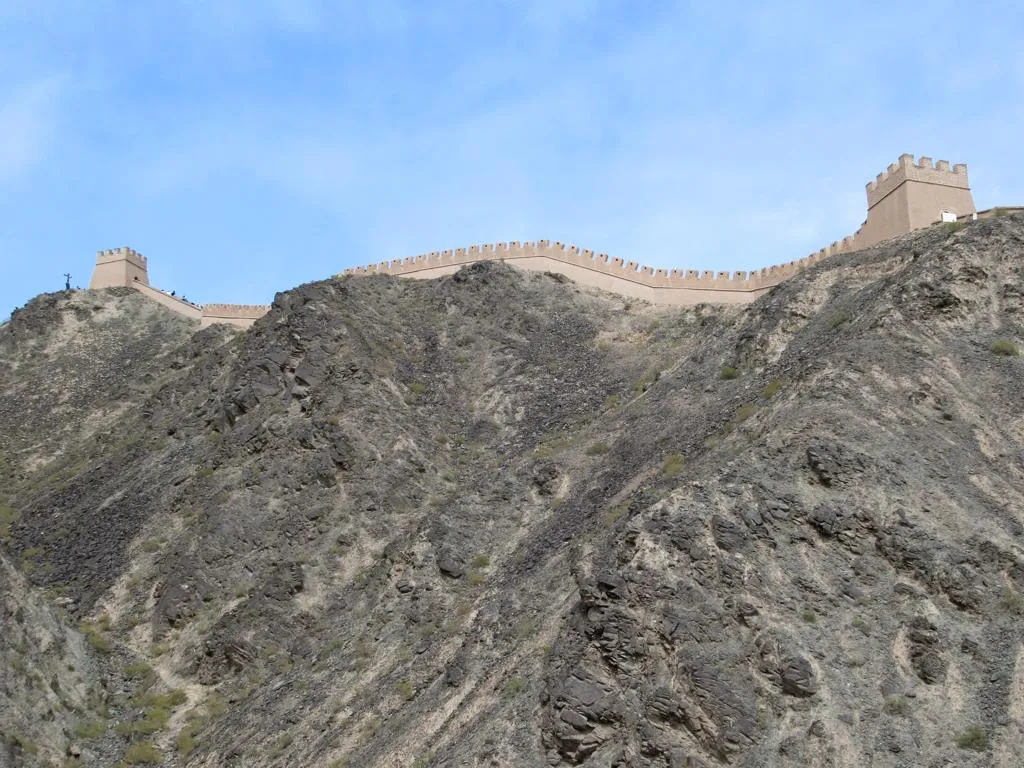
Jiayuguan explained as a system: the fort built from 1372 under the Ming general Feng Sheng - the wall's true western terminus and its largest garrison, kept for the exact arithmetic of frontier defence - the gate towers with the legend of the last brick (the master mason who budgeted exactly one brick to spare), the Overhanging Wall climbing the ridge to the beacon platform, and the desert beacon lines that carried smoke signals to the horizon. After the tomb murals - Wei-Jin brick paintings of kitchen scenes and banquets, a thousand years of dinner - the drive continues to Dunhuang for the night market's first round.
Meals B · Hotel Dunhuang, near the dunes
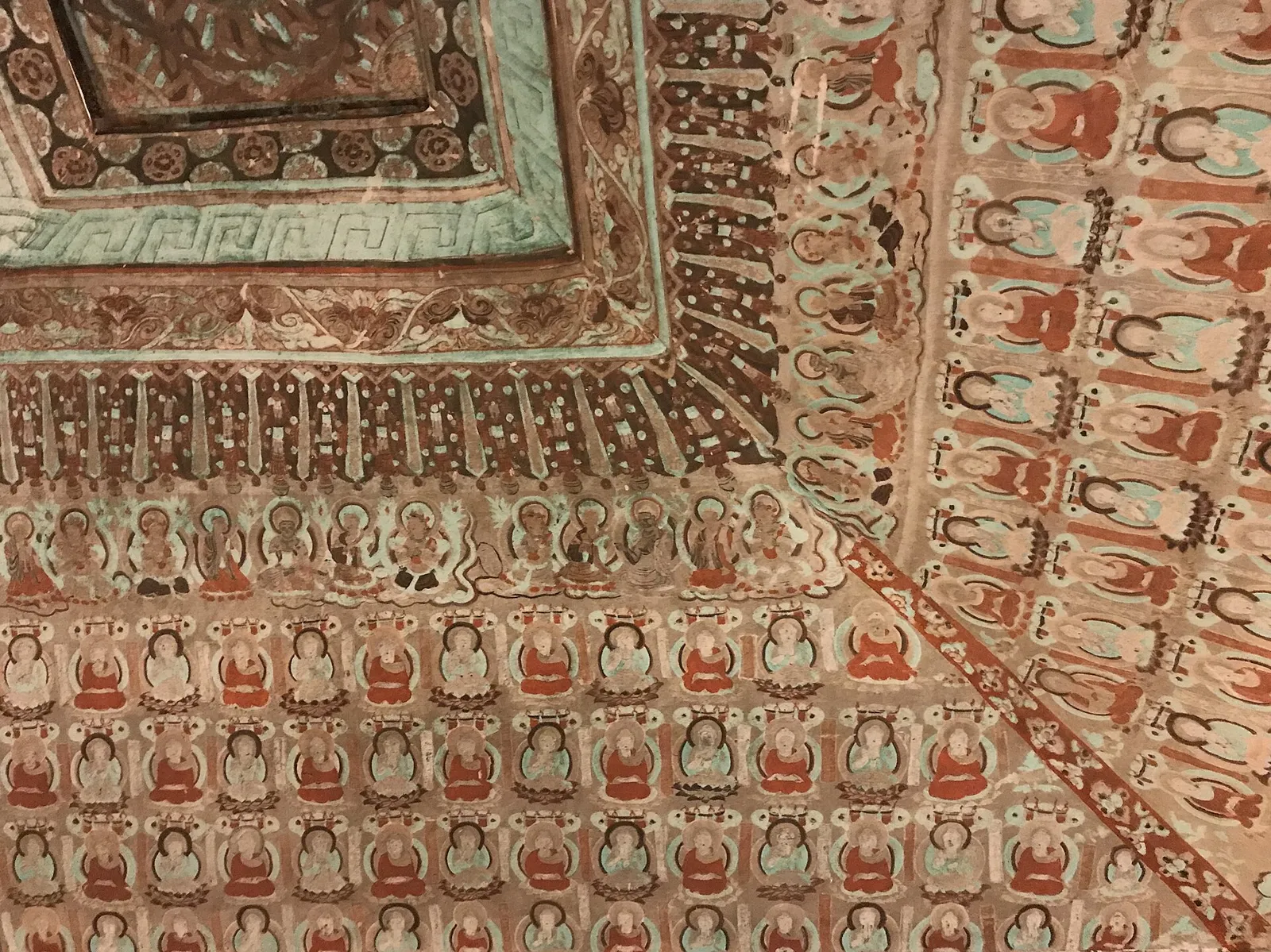
The week's centrepiece with reserved tickets: the eight open caves the research academy chooses, an academy-trained guide with the torch, and the Library Cave story told where it happened. Painted across a thousand years - begun in 366 AD by the monk Le Zun after his vision of a thousand Buddhas over Sanwei mountain, and worked by patrons from the Sixteen Kingdoms to the Yuan - the caves are the Silk Road's own diary: 735 caves, forty-five thousand square metres of mural, merchants' votive panels, monks' copies, and the pigments (lapis from Afghanistan among them) that travelled farther than their donors did. The Library Cave story is told where it happened - the sealed cell found in 1900 and stripped within a decade by Stein and Pelliot, the archaeology scandal that made Dunhuang studies a worldwide discipline. Afternoon at the Dunhuang Museum; evening free for the market.
Meals B, L · Hotel Dunhuang, near the dunes
Cave visits run on timed slots with a guide, and photography inside is not permitted.
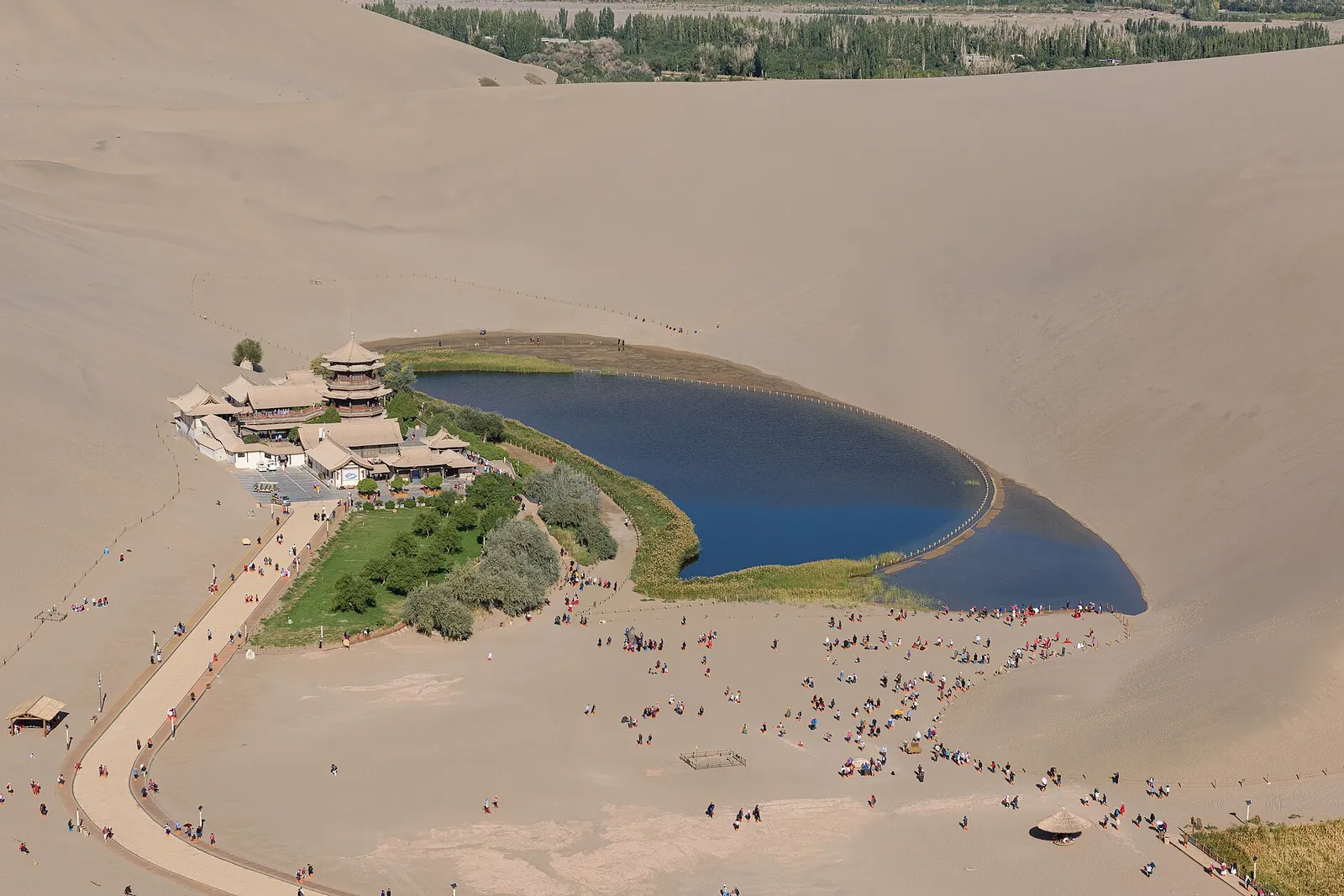
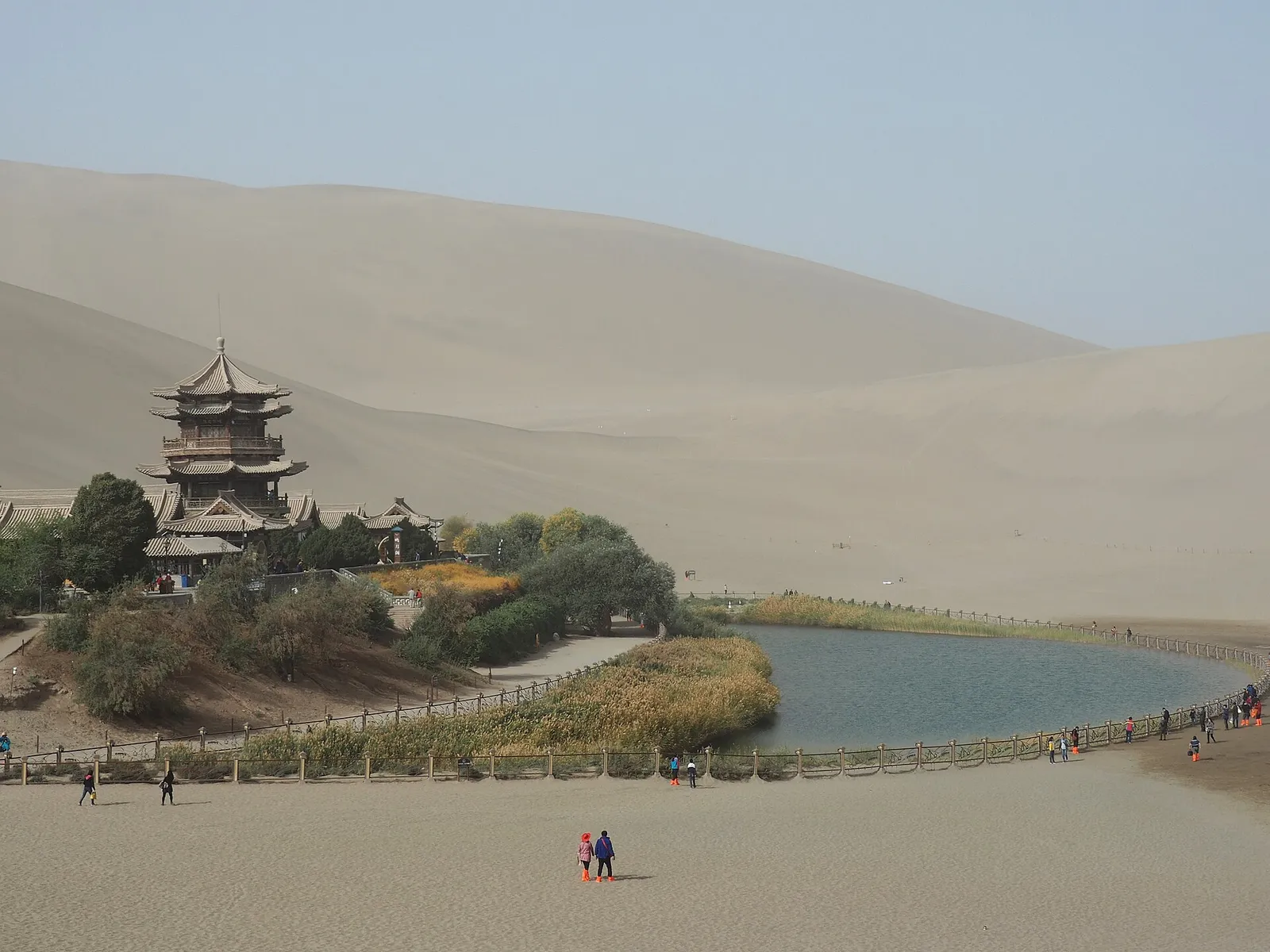
Mingsha Shan at opening, while the sand is still cool: the climb to the ridgeline, the run down, and Crescent Lake below - a moon of water the dunes have circled for two millennia without closing, the watering hole that made the Shazhou oasis a caravan fixture when every westbound convoy topped up here before the Tarim choice: northern route or southern. Camels are available on site for those who want the caravan photograph taken properly. The midday is a rest; dusk belongs back on the dunes, when the light and the temperature both drop.
Meals B · Hotel Dunhuang
Early or late is kinder: midday sand is hot and the light flattens out.
A full desert day west: Yumen Pass - the Han frontier gate garrisoned from around the second century BC, the checkpoint every Jade Road convoy from Khotan passed, and the pass Tang poets fixed forever as the edge of the known world (Wang Zhihuan's 'spring breeze never crosses Yumen Pass') - the Han-dynasty wall's tamarisk-and-gravel core still holding its line after two millennia, and the Yadan wind-carved city at sunset - fleet after fleet of stone ships running before a wind that never stops. Long drives, few facilities, the strangest horizon of the week; the group returns after dark with dinner waiting near the hotel.
Meals B, L · Hotel Dunhuang
Shade and water are limited out here; the guide carries both and sets the pace.
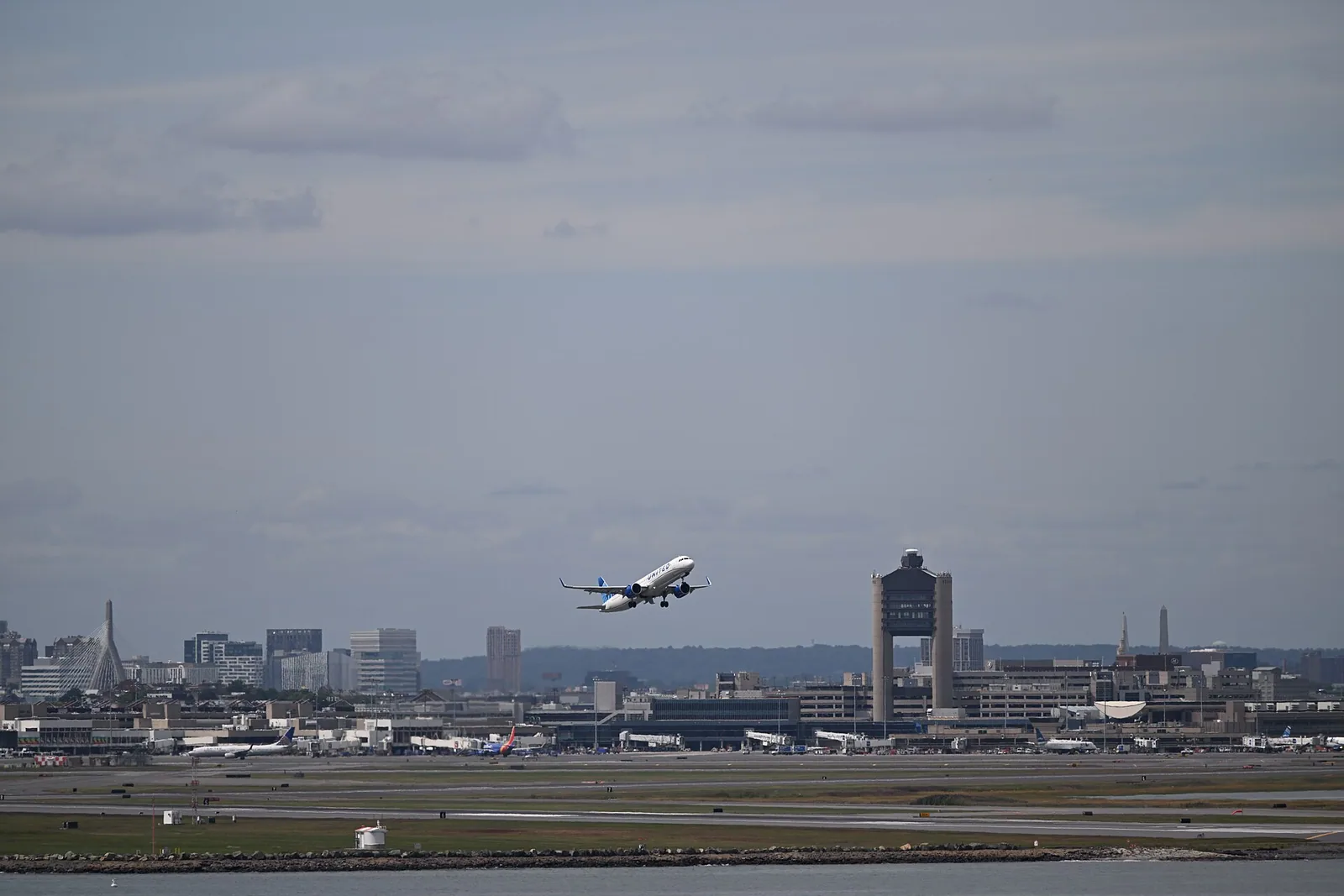
Transfer to Dunhuang airport for the direct flights east - Xi’an, Lanzhou, Beijing - or the through-rail for those continuing overland. The coordination team stays reachable until boarding, and the corridor links cleanly into a Xinjiang extension westwards or a Xi’an leg eastwards for the next brief.
Meals B · Hotel —
Departure day: bags out early and three hours at the airport keeps check-in unhurried.
What's included
- ✓ Accommodation in the agreed grade, with breakfast
- ✓ Private guide and private vehicle on touring days
- ✓ All internal transport between cities as stated — high-speed rail, transfers and ground arrangements
- ✓ Entrance fees for the sites named in the itinerary
- ✓ Meals as stated (B = breakfast, L = lunch, D = dinner)
- ✓ Drinking water in the vehicle, and a 24-hour emergency contact while the group is in China
- ✓ Mogao Caves reserved eight-cave tickets
- ✓ High-speed rail Lanzhou–Zhangye
- — Air travel is not included in Cathay Compass quotations and is booked separately by the travel partner
- — Chinese visa or visa-application costs
- — Travel insurance, including medical and cancellation cover
- — Meals not marked in the itinerary, drinks and personal spending
- — Anything listed under subject to confirmation until it is confirmed
- — Camel rides at Mingsha Shan (optional, booked on site)
Request a net trade quote
Tell us the dates, group size and anything the programme has to work around. We come back in writing with a net trade rate for this journey, quoted for the stated party size and agreed service scope. Net rates are never published on this website.